What is Myotonic Dystrophy?
Myotonic Dystrophy is part of a group of inherited disorders called muscular dystrophies. It is the most common form of muscular dystrophy that begins in adulthood. Myotonic dystrophy is characterized by progressive muscle wasting and weakness.
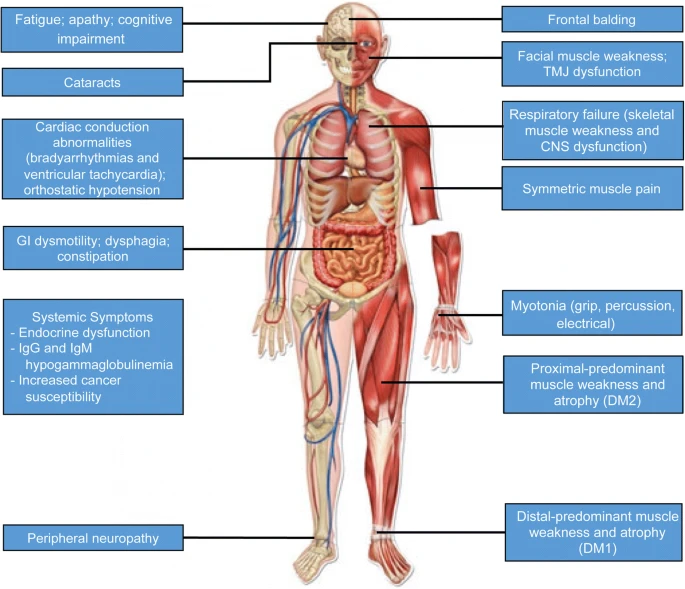
People with Myotonic Dystrophy have muscle wasting and weakness in their lower legs, hands, neck and face that get worse over time.
Signs and symptoms of Myotonic Dystrophy can appear at almost any age and vary greatly in severity. Even among family members.
As the disease progresses, the heart can develop an abnormal rhythm and the heart muscle can weaken. The muscles used for breathing can weaken, causing inadequate breathing, particularly during sleep.
The development of cataracts (opaque spots in the lenses of the eyes) relatively early in life is another characteristic of Myotonic dystrophy.